
Anyone who has commuted through Nashville over the past several years has watched the same story unfold. What used to be a twenty minute drive from Antioch or Hermitage into downtown now regularly stretches well past forty five minutes during peak hours. Interstate 24, I 65, and the Briley Parkway have all become synonymous with slow crawls rather than smooth drives, and while most people talk about this growth in terms of frustration and lost time, far fewer think about what it is doing to their vehicle’s maintenance needs.
Why Longer Commutes Change The Math On Maintenance
Standard maintenance intervals, the kind printed in your owner’s manual, are generally based on average driving conditions that assume a healthy mix of highway cruising and city driving. Nashville’s traffic reality no longer fits that assumption for a growing share of commuters. Someone spending an hour or more each way in stop and go conditions on the Nashville interstates is putting far more strain on specific components than someone covering the same distance on an open highway at a steady speed.
This matters because mileage alone does not tell the full story of wear on a vehicle. Two cars with the same odometer reading can be in very different mechanical condition if one has covered most of its miles at consistent highway speeds and the other has spent hundreds of hours idling and creeping forward in traffic. For a growing number of Nashville drivers, the second scenario is quickly becoming the norm rather than the exception.
Which Maintenance Intervals Should Move Up
Engine oil is one of the clearest examples. Manufacturers typically base their recommended oil change intervals on normal driving conditions, but stop and go traffic is specifically classified as severe driving in most owner’s manuals. Extended idling and frequent low speed driving prevent oil from reaching and maintaining optimal operating temperature, which reduces its ability to lubricate effectively and allows contaminants to build up faster than they would during steady highway use. If your Nashville commute regularly involves heavy traffic, shifting to the severe service interval rather than the standard one is a reasonable and inexpensive precaution.
Brake wear is another area where heavy traffic accelerates the schedule significantly. Every stop and restart cycle generates heat and friction wear on your brake pads, and a commute filled with hundreds of these cycles wears components down considerably faster than the same mileage covered at a steady highway speed. Drivers navigating dense Nashville traffic several days a week should plan on inspecting brakes more frequently than the standard annual check, since pads that seemed fine six months ago may already be thinning out faster than expected.
Transmission fluid, particularly in vehicles with automatic transmissions, also deserves earlier attention under heavy stop and go conditions. Constant shifting between stopped and moving, combined with the heat generated by frequent gear changes in traffic, puts additional strain on transmission components that a manufacturer’s standard interval may not fully account for if it assumes more typical driving patterns.
Why Idling Specifically Adds Extra Wear
It is easy to assume that a car sitting still in traffic is not really doing much, but an idling engine is still running, still circulating fluids, and still generating heat, all without the benefit of airflow that comes from actually moving down the road. Extended idling can lead to carbon buildup in the engine over time, since the combustion process at idle is generally less efficient than it is at normal operating speeds. Cooling systems also work harder relative to engine output during idling, since there is little to no airflow moving across the radiator compared to highway driving.
Battery health can be affected as well, particularly in vehicles with extensive electronics, infotainment systems, and climate control running continuously during a long, slow commute. The alternator has to work to keep up with this demand even while the engine itself is barely moving the car forward, which is a different kind of strain than the battery experiences during normal driving with more consistent alternator output relative to electrical demand.
Signs Your Commute Is Catching Up With Your Vehicle
A few signs suggest your maintenance schedule may need to shift earlier than the standard recommendations. Oil that looks noticeably dark or dirty well before your next scheduled change, brake pads that feel thinner than expected during a routine check, a transmission that shifts less smoothly than it used to, or a battery that seems to be working harder to start the car are all worth paying attention to. These symptoms tend to show up sooner for Nashville commuters dealing with heavy daily traffic than the standard maintenance calendar would suggest.
If you are dealing with a car that needs quick attention because of an issue that developed during a long commute, our article on why Nashville drivers trust mobile mechanics for fast repairs covers how quick, convenient service can get you back on the road without adding another shop visit to an already long day.
Adjusting Your Routine To Match Nashville’s New Reality
Rather than sticking strictly to the mileage intervals printed in your owner’s manual, it makes sense for Nashville commuters to think in terms of time spent in traffic as much as distance covered. A car that spends an hour a day in heavy congestion is accumulating wear at a different rate than the manual’s assumptions account for, and adjusting your maintenance schedule accordingly is one of the simplest ways to avoid being caught off guard by a worn component that seemed to fail earlier than it should have.
Why A Mobile Mechanic Fits Nashville’s Commuter Reality
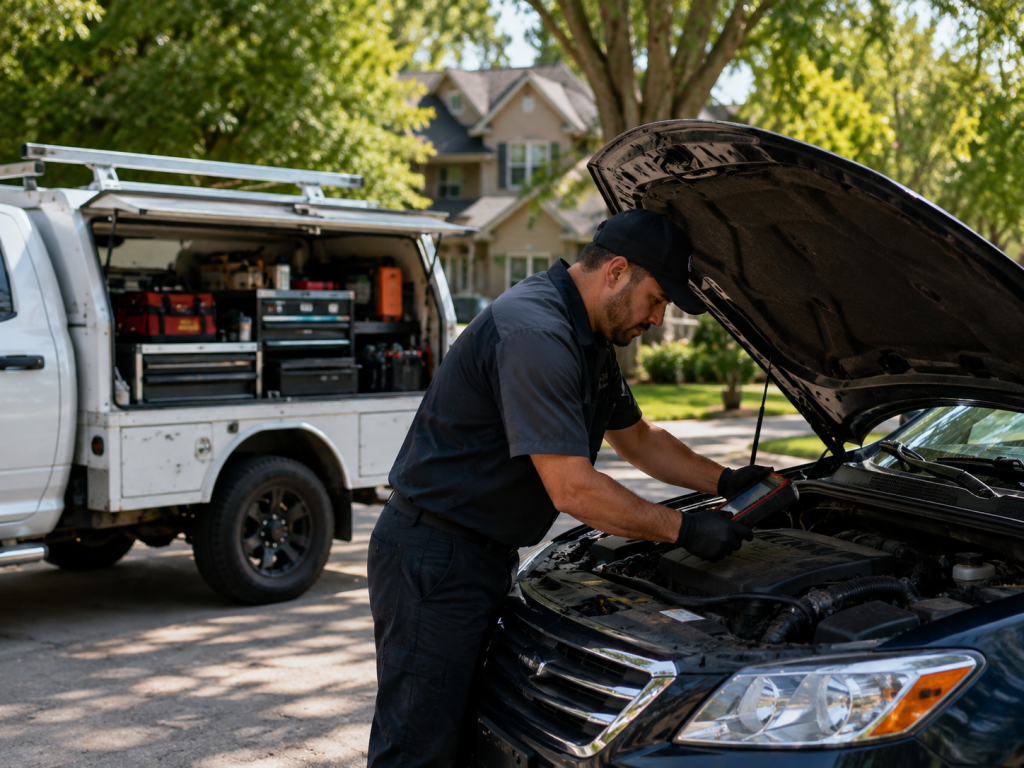
For drivers already losing significant time to traffic, adding a trip to a repair shop on top of an already long commute is not appealing. A mobile mechanic can come to your home or office in Nashville and handle oil changes, brake inspections, and other routine maintenance items without requiring you to burn additional time navigating the same congested roads that created the extra wear in the first place.
We covered the broader advantages of this approach in our article on why mobile mechanics are better than traditional auto shops in Nashville, which explains how convenience and flexible scheduling come together, especially valuable for commuters trying to keep up with a maintenance schedule that traffic has quietly moved up.
Stay Ahead Of What Your Commute Is Doing To Your Car
Nashville’s traffic is not likely to ease up anytime soon, and as commute times continue to grow, the gap between standard maintenance recommendations and what your vehicle actually needs will likely grow with it. Paying closer attention to oil condition, brake wear, and overall vehicle performance, rather than relying solely on the mileage markers in your owner’s manual, is one of the most effective ways to keep your car reliable despite the extra strain of daily congestion.
If it has been a while since your vehicle had a proper inspection, or if your commute has grown noticeably longer over the past year, reach out through our contact us page to schedule a visit at your home or office at a time that fits your schedule.
A little extra attention now can help your car keep pace with everything Nashville’s growing traffic is quietly asking of it.